
NFP Principle 8 - Organisational Culture
“It’s how we do things here”…
The AICD's NFP Governance Principle 8 is focused on Organisational Culture.
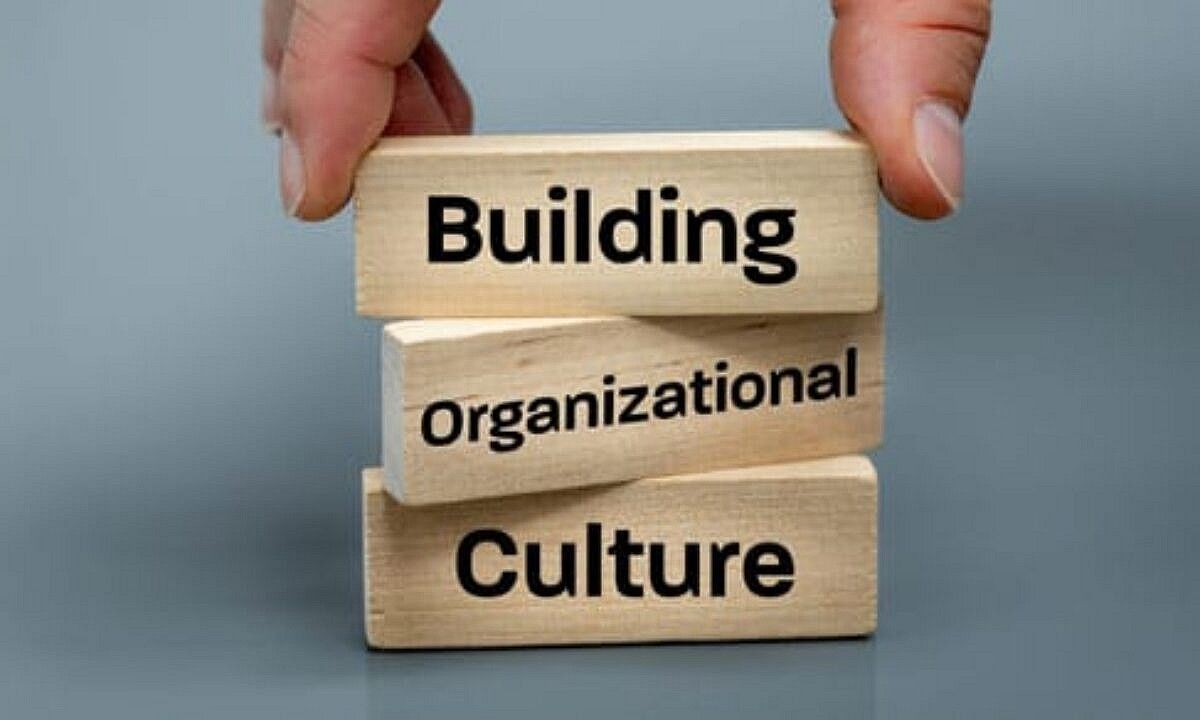
“It’s how we do things here”…that is the usual response to the question about organisational culture. Importantly, is it formally defined with a Staff Policy Handbook setting out the expected standards of behaviour and performance for staff, a Code of Ethics for the Board and Policies and Procedures providing formal guidance to all stakeholders?
Whether you are a For Profit or a For Purpose (Not for Profit) organisation, co-operative, association or proprietary limited company, the organisational culture is paramount to your reputation and engagement with your stakeholders – employee, investors, customers and community. Many an organisation has failed to establish a sound culture, with the Board or committee ‘setting the tone from the top’, modelling the behaviour expected of management and employees, with management then promoting and ensuring the culture is adopted by all employees and volunteers.
There are many key aspects to organisational culture that often smaller NFPs don’t even think about when setting up, growing and interacting with their stakeholders. Areas to consider include –
x Conflicts of Interest
x Related party transactions
x Whistleblower protections
x Anti Bullying and Harassment
x Workplace Health and Safety incl psychosocial safety
An organisation can be sophisticated in its approach to culture without needing to be a large, long established organisation. Indeed it is sometimes those organisations that are long established, that often fall foul of cultural shortcomings.
In the hospitality industry media has covered the 2024 fall from grace of the Swillhouse Group, due to allegations of sexual misconduct and drug use, whilst Merivale Group also labours under continual innuendo of poor culture in areas of client services and staff management.
Sadly, in the club industry there have been a number of recent cases of poor culture, with Governance breaches in the areas of Conflicts of interest and Related Party Transactions at more than one venue.
How does this happen when boards of directors are overseeing the governance and operations of such organisations? In the club industry, the NSW Government mandated minimum standards of governance education in 2013, with now thousands of club directors having completed the modules around roles and responsibilities of directors and financial literacy. However, it would seem in many cases, that completing the education, understanding the legislation and implementing the policies and procedures are not a guaranteed progression.
What should board be doing?
It is the responsibility of the board to ensure that all the relevant policies and procedures are in place for their organisation, enshrining legislative and moral compliance within the organisation and its interactions with stakeholders. This means the board tasks management to create the policies and procedures for the board to ratify for implementation across the organisation. Part of each policy and procedure must be measurement of compliance and management of non-compliance, where real consequences are incurred for poor culture.
If the organisation cannot handle this internally, then external expertise should be engaged to assist in creation, approval and implementation of the cultural standards, on behalf of the Board.
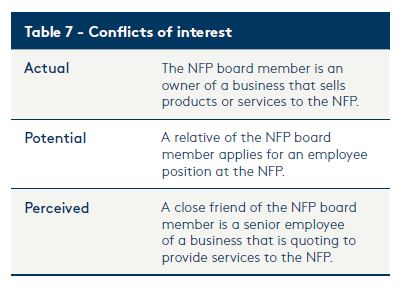
Three key areas of focus should be –
Conflict of Interest – a policy must be developed by the leadership team (which can include the Board) and approved by the Board for organisation wide implementation. This will include -
x Having a Register of Conflicts, reviewed at each Board meeting;
x Managing one off and ongoing conflicts of interest appropriately;
x Ensuring a safe and transparent environment for promoting disclosure of conflicts;
x Ensuring appropriate reporting of conflicts in the minutes of Board meetings.
Related Party Transactions – legislation under both the Corporations Act 2001 (Sect 229 & 588FDA) and the Registered Clubs Regulation 2025 (Schedule 1 Sect 5 & 8) which guards against people related to the directors, company secretary or other officers of the organisation gaining benefits.
x Management contracts are prohibited with close relatives of an officer;
x Employment of family members (in clubs), following appropriate investigation to establish the relationship, must be approved by the
Board;
x Employment of family members (in clubs) must be reported in the Annual Report as a Related Party transaction.
Workplace Health and Safety – a policy to implement a safety culture in an organisation, is critical in industries where (especially) machinery, products (e.g. hazardous chemicals), dangerous environments (especially construction sites or confined spaces) or environments where psychosocial harms may occur, is mandatory. These policies must ensure a safe work place, safe work equipment and safe work practices.
A strong safety culture will help to minimise the risk of corporate failure resulting in death , injury, bullying, harassment and other psychosocial harms occurring, rendering the directors, management and employees of the company liable. This can be a costly exercise, especially for directors in the event of a negligent death of a stakeholder, as the ultimate responsibility for safety rests with the Directors (as PCBUs [Person Conducting a Business or Undertaking] under the WH&S legislation).
Monetary penalties run to the millions of dollars for negligent death cases, so it is imperative to ensure a safety culture is the standard not the exception in all businesses.
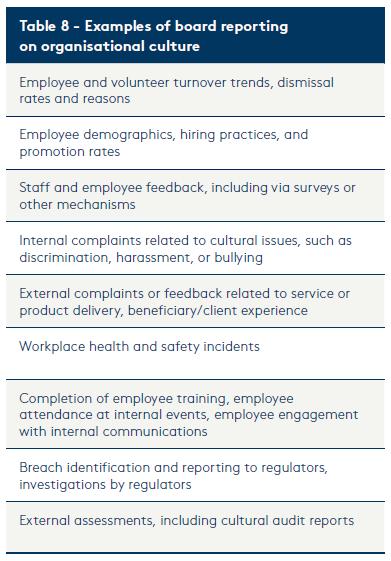
Integrity – the key to industry leading culture
Integrity is the centre piece of good culture. I love the definition of integrity that says “Integrity is doing the right thing, even when no-one is watching”. This simple statement encapsulates the heart of great culture – dealing at all times with integrity ensures –
x Respectful relationships;
x Legislative compliance;
x Minimising harm in all its forms – physical, mental and psychosocial;
x No conflicts of interest;
x No related party transactions or transgressions;
x Protection of and encouragement of whistleblowers and their reporting.
Leading, modelling, implementing and monitoring a great corporate or organisational culture is a cornerstone of good governance and will benefit the organisation is many ways. The organisation will be recognised reputationally as one with a great culture, which will enhance the organisation’s standing as an employer of choice and build trust and respect within the industry the organisation operates in.
Rest assured, organisations that profess a good culture but do not ‘live’ that culture eventually get caught out. And like trust, that reputation takes years to build and mere moments to destroy. Ensure that you have a comprehensive approach to ensuring a great organisational culture, including Board and Management oversight of all aspects of that culture, with defined and implementable consequences for breaches at any level – from the Board down to the factory floor.
For assistance in developing the policies and procedures for organisational culture for your organisation, contact Ron Browne, Managing Consultant 0414 633 423 or ron@extrapreneurservices.com.au.